

10:15
다음까지 46분
박영자 어르신 · 혈압 측정
2층 A-3호
측정 가능 · 혈압약 08:00 복용 후 2시간 경과Take the guided tour?
Press Enter and the screens move in order, walking through Haru Anbu from start to finish.
Press Enter to go to the next screen.
For voice, turn on narration in the top bar.
Patients · Care teams · Families.
Three scattered views, joined by one daily check-in.
Haru Anbu is a care communication platform that connects three perspectives of care, patients, care teams, and families, across five screens.
A patient's daily record passes through the care team (caregivers and clinicians) and reaches the family automatically. From urgent SOS alerts to medication checks, daily greetings, and home-visit notes, one entry reaches exactly the right person for each role.
They're doing fine.
Probably?
A parent's well-being is the heaviest question every morning. Family, care team, and elder, three lives that drift apart in three different languages. And a single phone call leaves no one truly at ease.
From an aging society (7%) to super-aged (20%): France took 154 years, the U.S. 88, Korea just 24. 2.14 million seniors aged 65+ live alone, and Korea has the OECD's highest elderly poverty rate. Care demand is exploding, yet families and clinicians are still connected by a single phone call.
Source: Statistics Korea 2024 · OECD
Families wonder how their parent's day went, elders want to spare their children worry, and care teams repeat the same updates again and again. They all care about the same day, yet those feelings never quite reach one another, drifting apart, every single day.
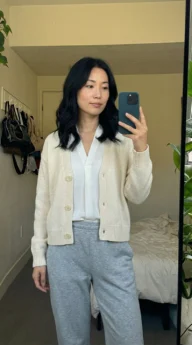 Family
I'm not sure if she ate well today.
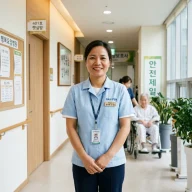 Caregiver
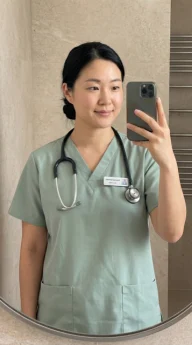
I spend two hours a day on calls from families.
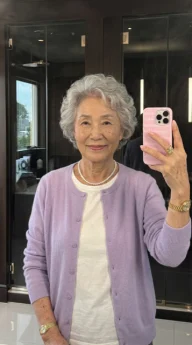 Patient
I don't want to worry my children.
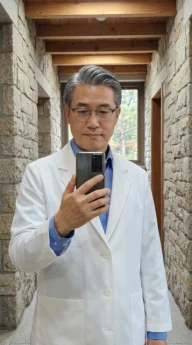 Clinician
I log each patient's condition separately, every time.
FamilyI live far away and can't visit often.
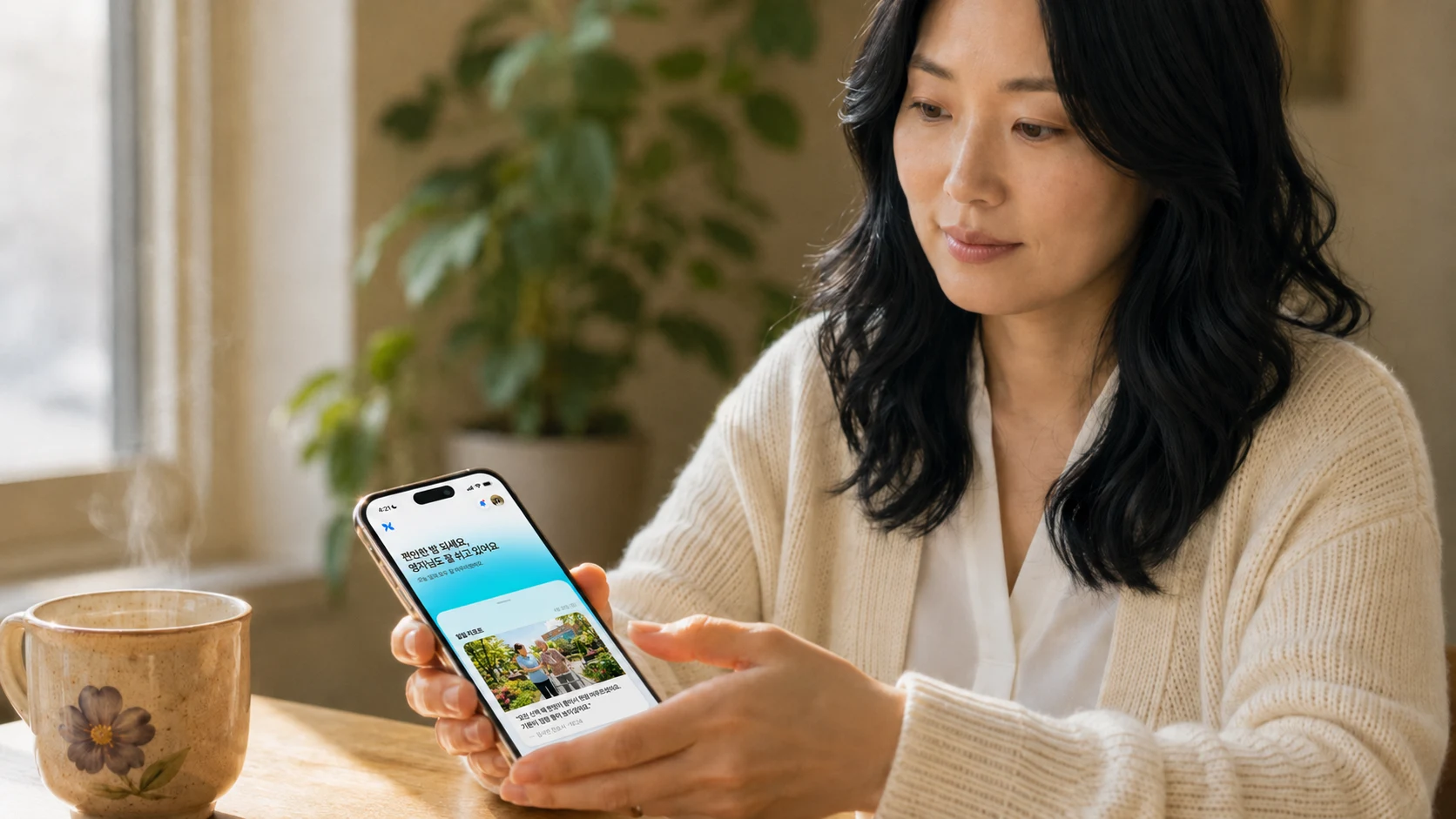
Not a mockup, but real scenes of people using Haru Anbu. It captures how far-apart family and elders, together with the care team, stay connected on a single flow. How a daily check-in travels, and how one person's day reaches everyone — the real moments beyond the screen, in a single short film.
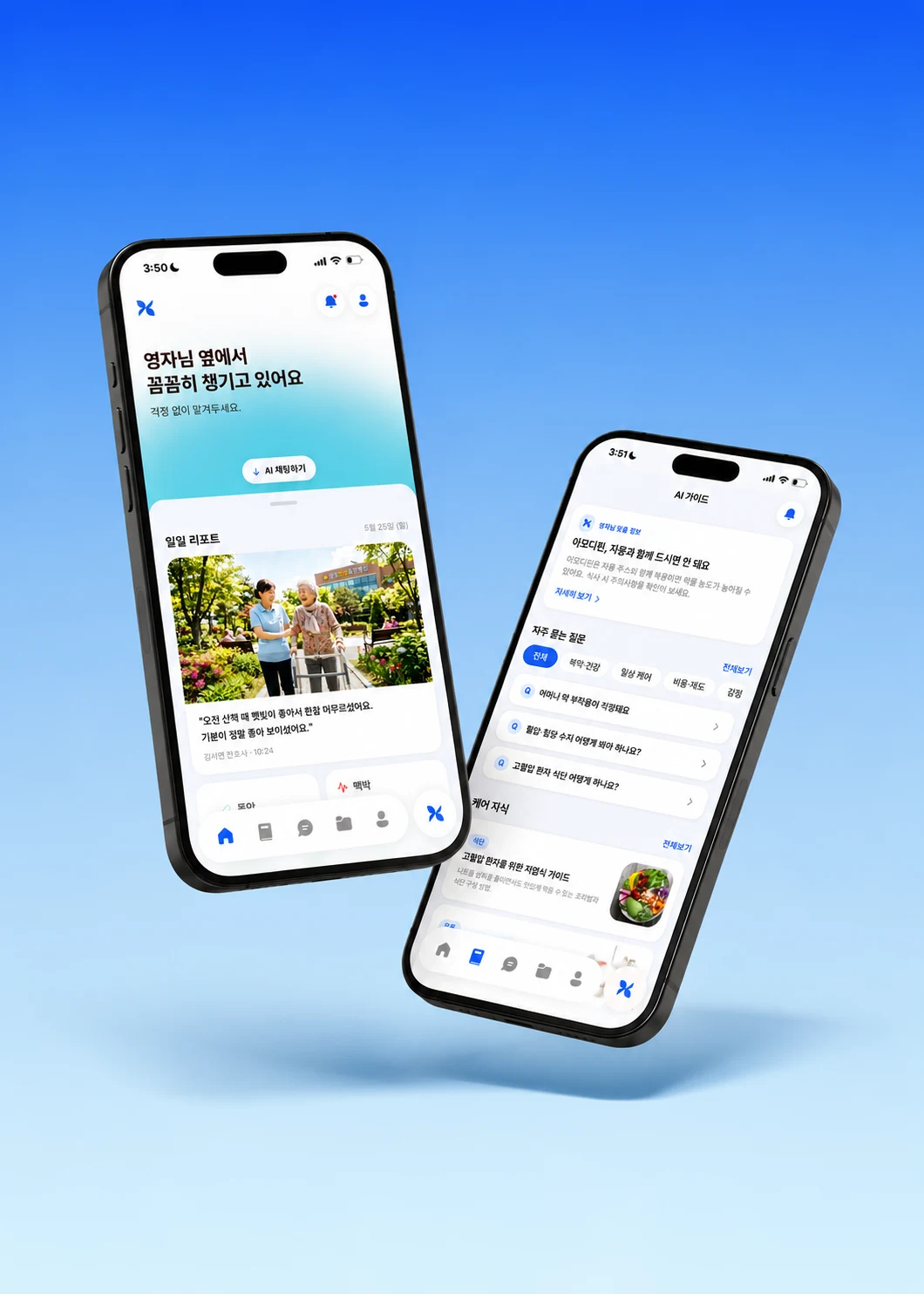
Patients, care teams, and families. Three views watch over the same person, yet speak in different languages. Haru Anbu closes that gap with one line a day. So yesterday's flow becomes this morning's peace of mind.
One line a day, and you know right away they're doing fine.
Large type, easy touch. One tap is all it takes to send word.
Every act of care becomes the day's check-in, passed along just as it is.
Not any single app, but a promise the whole of Haru Anbu keeps. Whichever screen you open, these six work together, with families, caregivers, clinicians, and patients meeting on the same flow. All six read the same data in each person's own language, carrying one person's day through without a break.
AI condenses meals, meds, sleep, and activity into a single 0–100 score. Families read yesterday in five seconds.
Each morning, the day's care records turn into a family card automatically. You see yesterday without a single phone call.
From SOS to alerting caregivers, clinicians, and family, all connected automatically in three minutes on average.
AI catches signals that differ from the norm and alerts the care team early. Care shifts from reactive to preventive.
The same data reaches patient, care team, and family, each in their own language. One entry, three people.
AI turns a caregiver's spoken handover into organized key points. Hands stay free of paperwork.
Sleep, meals, medication, mood: scattered signals condense into one AI card. In five seconds on the commute, families picture their parent's yesterday; photos and comments arrive too, turning distance into closeness.
A caregiver's tap on a checklist passes through the clinician's review and lands as a single card on the family's screen. Without one phone call or one handwritten note, yesterday's parent is visible, with three viewpoints meeting in real time on the same data.
The clinician web's all-patient view and the SOS and vitals you get on your phone during rounds run on the same data. One desk screen takes in the whole ward; on rounds, treatment and handover continue right in your hand. Less time on admin, more time on the floor.
Family · Patient · Caregiver · Clinician app · Clinician web: five points of view, live right here. Don't just look. Tap and swipe through them yourself. Feel, at your fingertips, how the same data reaches each role differently.
AI gathers the previous day's care data and sorts sleep, medication, meals, and mood into one card. Voices from the floor arrive as photos and comments, turning distance into reassurance. In five seconds on the commute, families see their parent's yesterday.
Three screens, large type, wide touch targets. Anyone can press SOS within five seconds, and reminders for meds, meals, and rehab arrive calmly, one big line at a time. A screen that never makes a hand hesitate, from the very first day, is where we begin.

Morning shift progress, time until the next care task, and the priority patient to see first, all on one screen. What you need the moment you clock in appears top to bottom, so there's nothing to go hunting for. Begin with the whole day's flow in view.
2층 A-3호
측정 가능 · 혈압약 08:00 복용 후 2시간 경과
When an SOS sounds, the patient's location and vitals appear within two seconds. On rounds, treatment and handover notes are done one-handed, and desk and mobile move on the same data so the flow never breaks. The record completes itself as you walk the ward.
AI ranks abnormal signals by severity, showing the patient who needs attention first, first. Time once lost to admin returns to rounds and bedside judgment, while one desk screen takes in the flow of the whole ward.
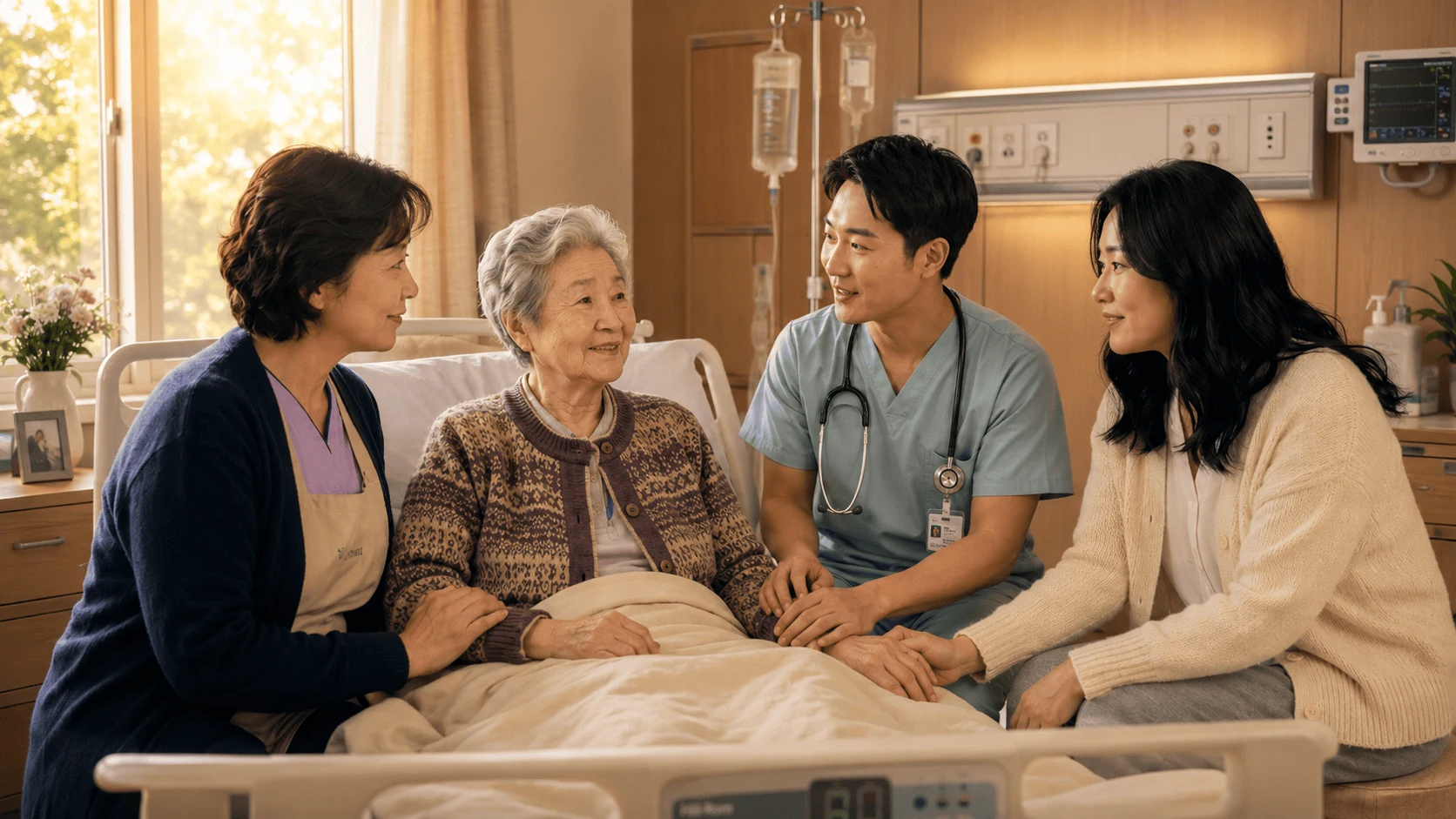
Families, patients, and the care teams beside them: the faces left wherever Haru Anbu reaches.

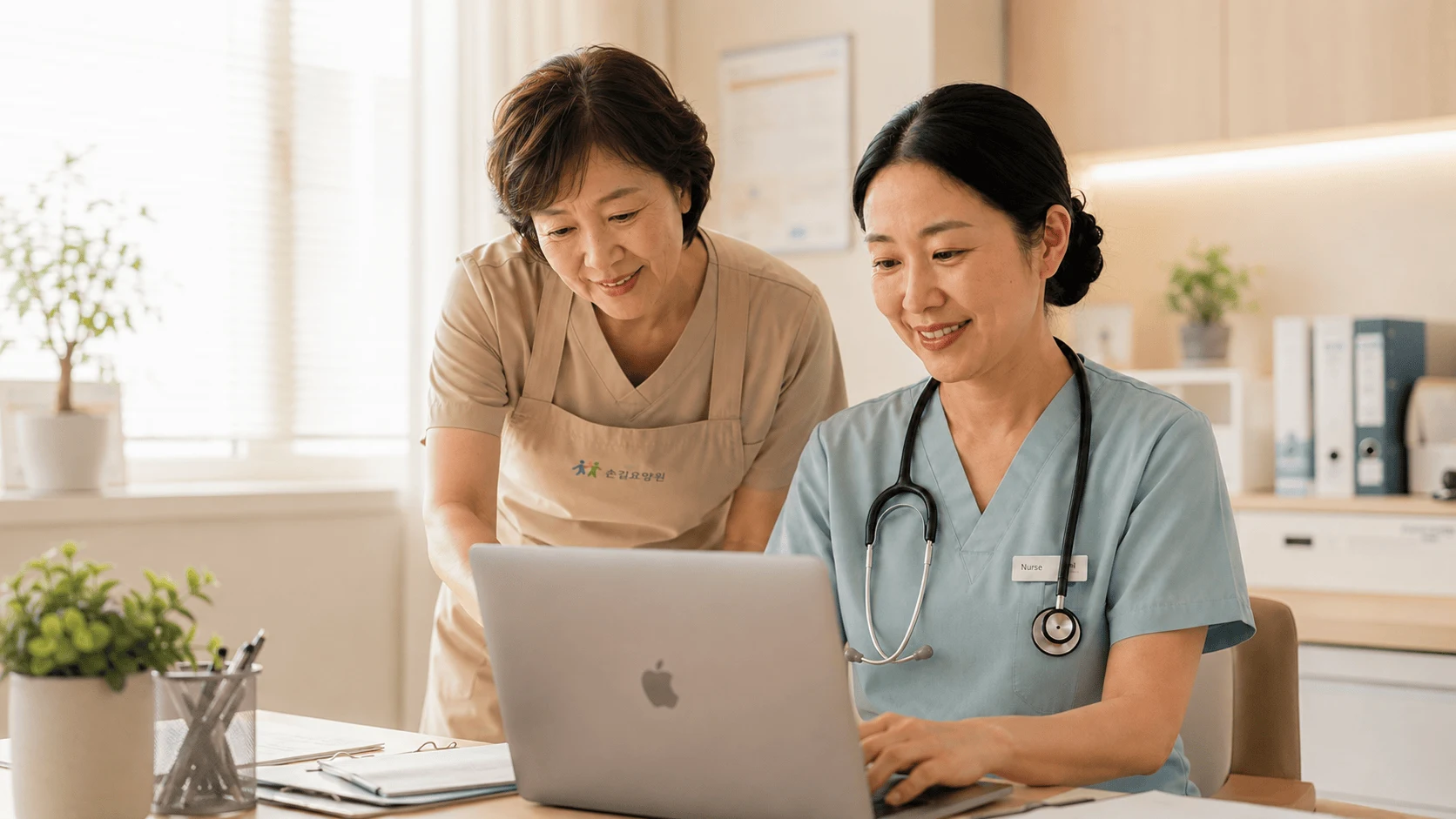

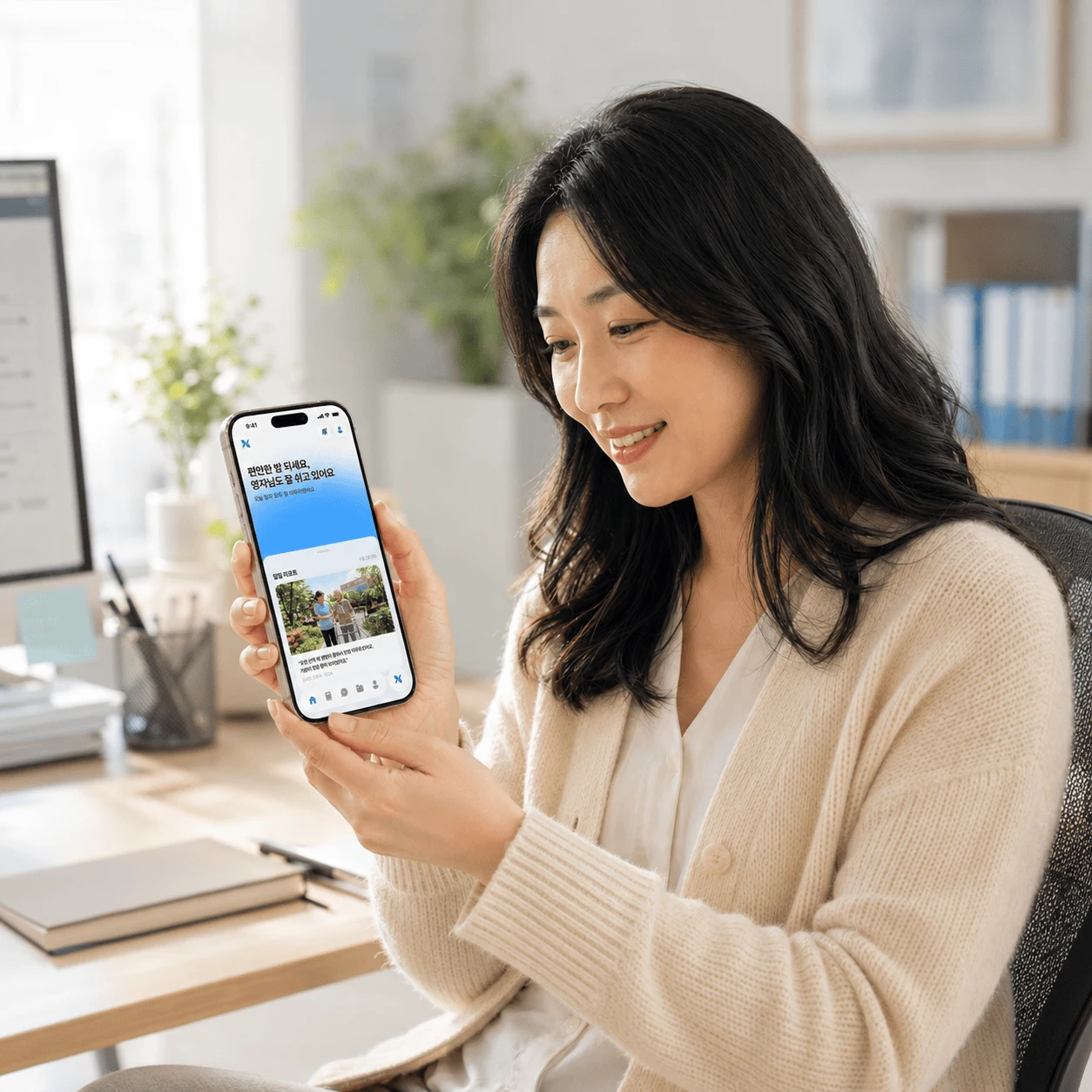
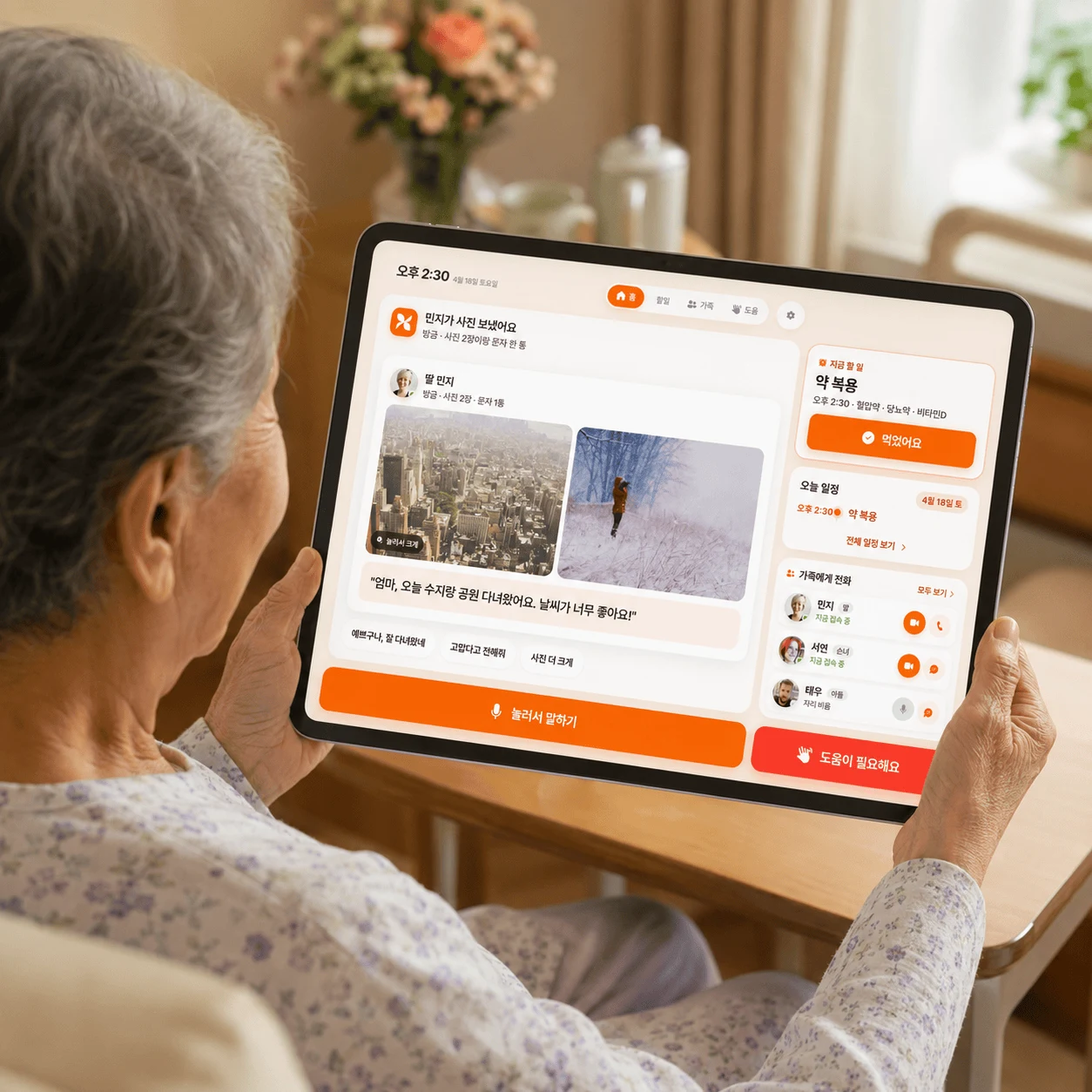
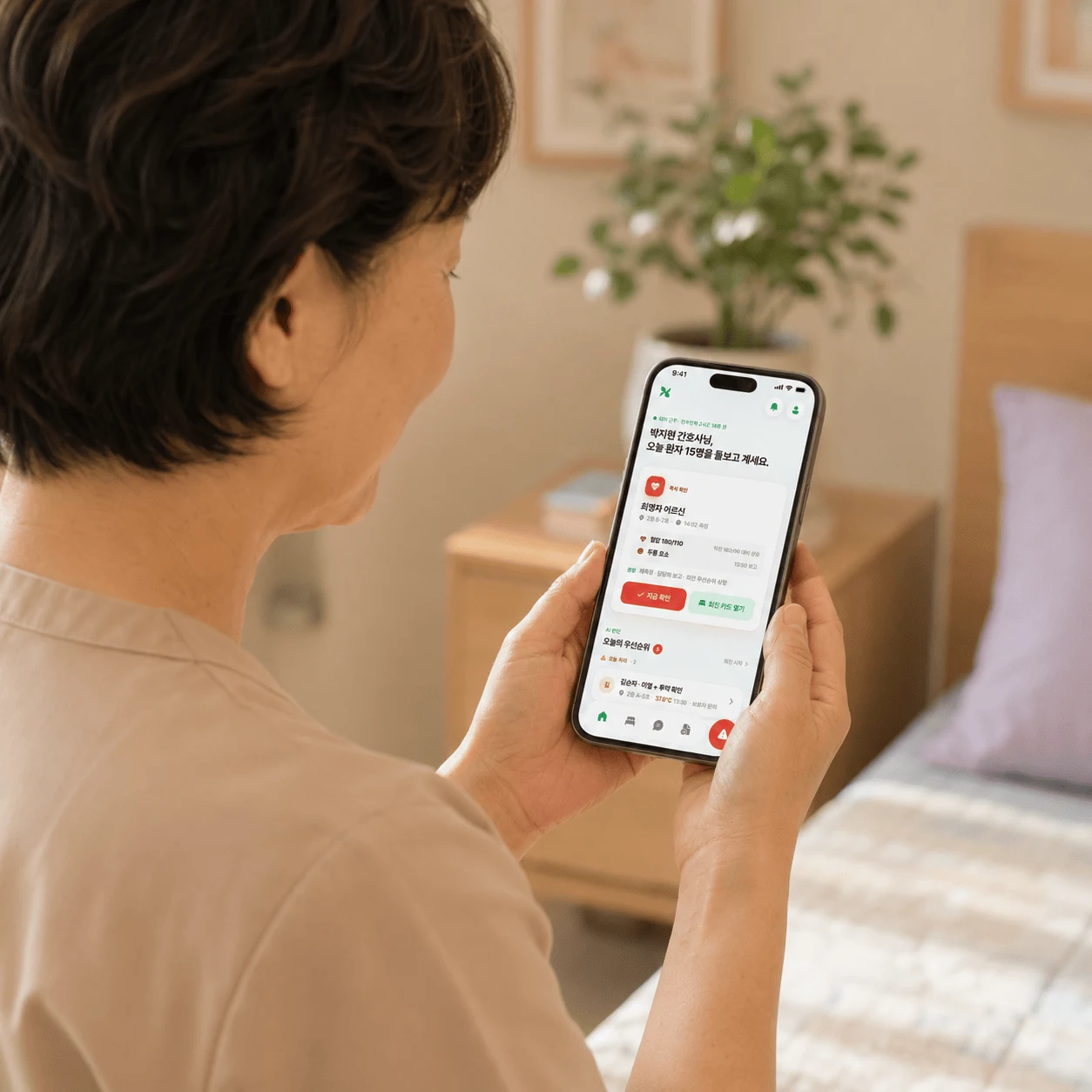
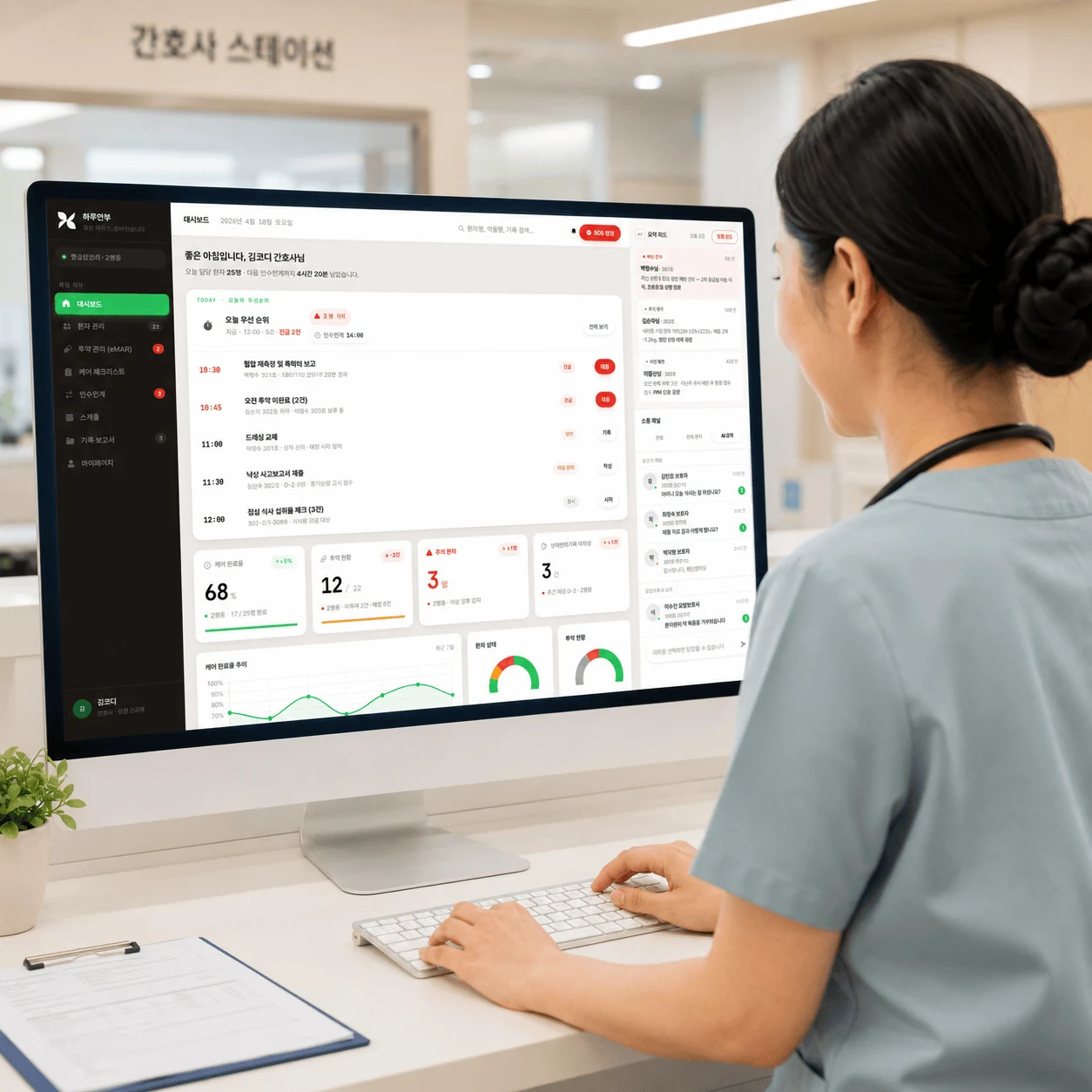
The heart that never forgets to ask after someone, every day, written onto a single screen. That is Haru Anbu. So yesterday's flow carries into today's peace of mind, three views meeting within the same day.